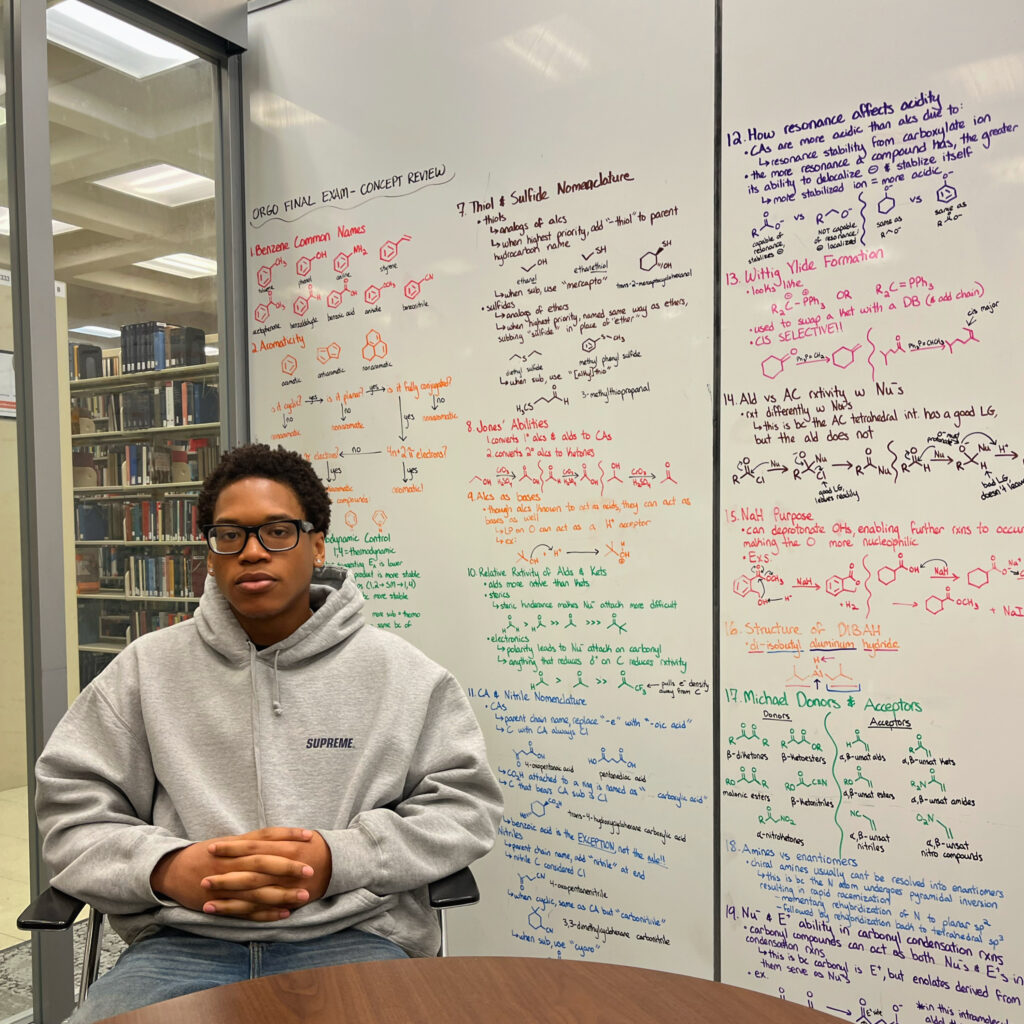
A conversation about poetry, perspective, humanity, and what it means to truly see other people.
Some writers use language to make sense of themselves.
Nnamdi seems more interested in using it to understand everyone else.
The conversation moves through poetry, Black literature, creativity, and personal growth, but repeatedly circles back to one larger question: what happens when we make a genuine effort to see the world through someone else’s eyes?
For Nnamdi, writing isn’t simply a creative practice. It’s an act of empathy. A way of uncovering perspectives beyond his own and restoring the humanity that often gets lost in the pursuit of ambition, success, and self-interest.
What’s been taking up your headspace recently?
NNAMDI
I’ve been really into poetry recently.
There’s this video of Black women writers reciting poetry, and I think it’s incredible.
Especially as a man, it’s a perspective I don’t have a complete grasp of.
A lot of those poems deal with womanhood and motherhood.
There was one poem about childbirth and the connection between a mother and her child.
That’s just a perspective I could never naturally experience myself.
It’s powerful to hear someone else’s voice and see the world through a lens you wouldn’t otherwise have access to.
That’s been on my mind a lot lately.
“It’s powerful to hear someone else’s voice and see the world through a lens you wouldn’t otherwise have access to.”
What’s your manifesto right now?
NNAMDI
I think my mission is to bring out the humanity in everybody.
A lot of the time we’re taught to view the world through the lens of self-interest.
We’re encouraged to think about what serves us best and what gets us the quickest result.
But when you only chase what’s expedient, you stop thinking about the human cost.
You stop thinking about the ways your own thinking can become warped by what you’re pursuing.
In a way, you can corrupt yourself by what you chase.
Through my writing and through my work, I want to push against that.
I want to restore the humanity in people.
I want to remind people that we’re all more than our ambitions, our goals, or what we can provide to others.
“You can corrupt yourself by what you chase.”
What got you into writing?
NNAMDI
During my senior year of high school, we had a March Madness-style poetry bracket in one of my classes.
I immediately connected with poetry.
At first, I wasn’t writing to be published.
I wasn’t writing for other people.
I was writing for myself.
Writing became a way for me to communicate with myself and uncover feelings I didn’t even realize I was carrying.
Sometimes there are things bothering you beneath the surface that you don’t fully understand until you sit down and put words to them.
That’s what writing became for me.
Over time, it’s evolved into something larger.
Something I can use to serve myself, my community, my culture, and hopefully others in the future.
“I was writing for myself before I was writing for anyone else.”
Do you ever plan on becoming a full-time writer?
NNAMDI
I would love to.
I definitely want writing to be part of my life forever.
Whether that’s poetry, short stories, essays, or something else entirely.
But realistically, writing can be a difficult path financially.
I think it’ll probably be something I continue alongside whatever career I pursue.
That said, I never want to stop creating.
I never want to stop writing.
It’s become too important to who I am.
Who’s your favorite author?
NNAMDI
James Baldwin.
Without question.
He’s my favorite author.
Right now I’m reading
Another Country and I love it.
I’m not finished with it yet, but it’s incredible.
If we’re talking about a Baldwin book I’ve finished, I’d probably say
Giovanni’s Room.
The way Baldwin understands people is something I deeply admire.
“The way Baldwin understands people is something I deeply admire.”
If you could have dinner with four creatives, who would they be?
NNAMDI
That’s a tough question.
I’d probably choose someone from every creative field that I love.
First, Denzel Washington.
He’s my favorite actor of all time.
Every time I’ve heard him speak, he’s been thoughtful, deliberate, and incredibly articulate.
Second, James Baldwin.
That’s an easy choice.
Third, Prince.
He’s one of those rare artists who seemed capable of doing everything.
His work feels completely all-encompassing.
And fourth, Richard Pryor.
People don’t always appreciate how much skill goes into comedy writing.
When you’re laughing, you’re often not thinking about the craftsmanship behind it.
But comedy is storytelling.
It’s observation.
It’s timing.
It’s a beautiful form of expression.
I’d love to sit at a table with all four of them and just listen.
“I’d love to sit at a table with all four of them and just listen.”